☆☆☆☆
Persephone’s Curse by Katrina Leno tells the story of four sisters. They are allegedly descendants of the Goddess of the Dead, Persephone (according to their eccentric aunt). Growing up with the ghost of a boy named Henry in the attic (with which one sister falls in love and another banishes to the Underworld) the sisters must come together to find a way to not just save Henry, but the world itself.
This book is really solid. It is a fast paced, easy to read story with identifiable and unique characters.
The entire book is from the point of view of Winnie, a girl on the precipice of adulthood. Leno does a fantastic job capturing the mindset of a girl of that age – the portrayal does not come off as too adult or too childish. The ages of the sisters hit a sweet spot. They ensured that the sisters were in individual life stages but were not too far apart.
Books that centre around family can go one of two ways: they can either be extremely corny or well done. This book falls into the latter category.
Leno is talented with creating characters who are full of life and have their own “voice.” She balances the amount of them perfectly, and takes time to introduce them individually so that the reader isn’t overwhelmed with them.
Although Leno doesn’t focus particularly on details, the storytelling and dialogue (including internal) well make up for it. I am not a big fan of first person POV. However, this book was a good example of when it should be used.
When Leno does use detail, it’s to set the scene or emphasize certain points. It brought back nostalgia from my youth, including walking around at night in the winter. You could feel the emotions of the character, even simply from dialogue. I don’t take too much stock in details, as sometimes it can be cumbersome when I already have an active imagination creating a movie in my head as I go.
I went into this book knowing nothing of Persephone, but I’ll probably look into it more later. You don’t need to know anything about Persephone as it is well explained.
One strength that I appreciated about this novel was the accurate representation of bipolar. All mental illnesses are challenging to portray. Bipolar, although not from the main character’s point of view, is usually shown in certain negative lights. In this circumstance, it was well managed. The depiction is so hyper specific and it feels like the author has some sort of personal connection with it.
Although intellectualization isn’t necessarily a bipolar trait, it was one that I liked was included, whether intentionally or otherwise.
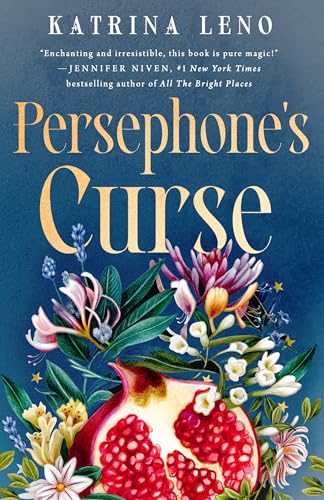
Unlike many YA novels lately, this one does not contain any sorts of graphic materials or sex scenes. I think the book’s blurb could be improved. When I first read it, I was a little hesitant. The cover of the book is beautiful, however, and very professional.
One aspect I wasn’t a huge fan of was a section in which one character is frequently described as “very cute” and there is way too much random focus on her, which could be reeled back a significant amount.
I feel like it would do well to include a LGBT+ tag for marketing purposes, but that’s my unprofessional opinion.
There were a few grammatical mistakes etc. that I had found, which I’ll include here (no need to read past here if you’re not looking for nitpicking):
Page 125: At the bottom of the page, it is describing Winnie and Clara in bed together. Winnie asks if she can read, and after, the sentence says: “For once I was tired before her.” The implication here would be that for once Clara would be tired before Winnie, no?
Page 141: I feel as if there should be some sort of formatting to imply what is written is an email. There’s no italics or quotations currently.
Page 215: It is describing the mom as putting her wine glass in the dishwasher:
Another sip of wine, emptying the glass, then a rinse and the dishwasher…
This read awkwardly to me. It feels like it’s missing a word or something, like it should be “into the dishwasher” instead of just “the dishwasher.”
Page 229:
She had been sleeping later than she usually did, these days.
The comma seems unnecessary.
On page 241 and 273:
The dialogue tags are removed completely. This was likely a stylistic choice, but I didn’t particularly care for it.
Discover more from JA Keuken
Subscribe to get the latest posts sent to your email.
 JA Keuken